National authorities in Bangladesh have rapidly mobilized a nationwide response to contain the ongoing measles outbreak, including the rollout of a phased measles-rubella vaccination campaign targeting children aged 6–59 months, alongside strengthened surveillance, laboratory capacity, and hospital preparedness.
This response comes as Bangladesh faces a widespread and high-intensity outbreak, with transmission reported from 58 of 64 districts. Since 15 March 2026 and as of 14 April, 18,219 suspected cases, including 2,897 laboratory-confirmed cases, and 164 suspected deaths (30 confirmed) have been reported, corresponding to a case fatality rate of 1.2%. The highest number of cases is reported from Dhaka Division, while incidence is highest in Barisal Division (39.4 per million population) followed by Dhaka (35), Mymensingh (29.6) and Rajshahi (28.3). In Cox’s Bazar, including the Rohingya camps, a limited number of cases (eight lab-confirmed cases) have been confirmed and are being closely monitored.
The outbreak is predominantly affecting young children, with around 80% of cases among those under five years of age, particularly children under two years and infants under nine months. Mortality is primarily reported among unvaccinated children, highlighting immunity gaps in recent birth cohorts.
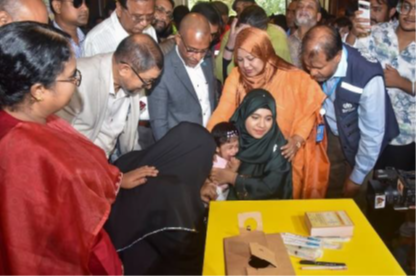
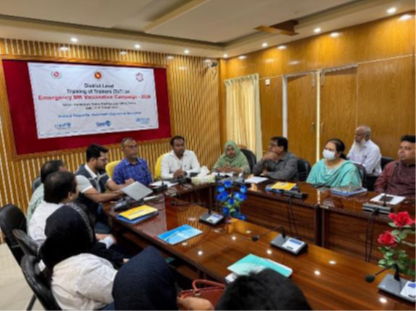
In response, national authorities have taken decisive policy and programmatic actions. Having rolled out a high-quality nationwide measles-rubella vaccination campaign on 5 April 2026, targeting 1.2 million children under five years of age in high-incidence areas across 18 districts, followed by expansion to additional urban centres and a second phase covering the remaining upazilas, with nationwide completion planned by 21 May 2026. These efforts are being implemented alongside measures to strengthen surveillance, laboratory capacity, hospital preparedness, and case management, as well as actions to address vaccine supply constraints through expedited procurement processes. WHO and partners are supporting these national and sub-national efforts through technical assistance, operational planning, and coordination.
Despite ongoing response efforts, the outbreak’s scale and rapid spread driven by immunity gaps, high population mobility during recent festive season, declining routine immunization, and vaccine supply constraints, risk prolonging transmission, straining health services, and increasing the potential for cross-border spread in the South-East Asia Region. Immediate priorities focus on ensuring high-quality implementation of the nationwide vaccination campaign, restoring routine immunization services, strengthening surveillance and laboratory systems, and enhancing clinical management and infection prevention measures to reduce morbidity and mortality and bring the outbreak under control.
Timely and sustained implementation of these measures will be critical to interrupt transmission, protect vulnerable children, and prevent further spread within Bangladesh and across the region.